When the pandemic forced most UK office workers home in March 2020, few organisations expected the change to be permanent. Six years on, the picture is clear: hybrid working is not a temporary arrangement but the settled normal for a majority of British companies, and the commercial property market has had to adapt accordingly.
The Office Has Become a Different Kind of Tool
The key shift is in what organisations expect an office to do. Before 2020, the primary purpose of office space was to house workers for their working hours. That role has diminished considerably. Now, for many businesses, the office exists primarily as a place for collaboration, training, team building, and the social infrastructure that sustains a shared culture — activities that are genuinely difficult to replicate remotely.
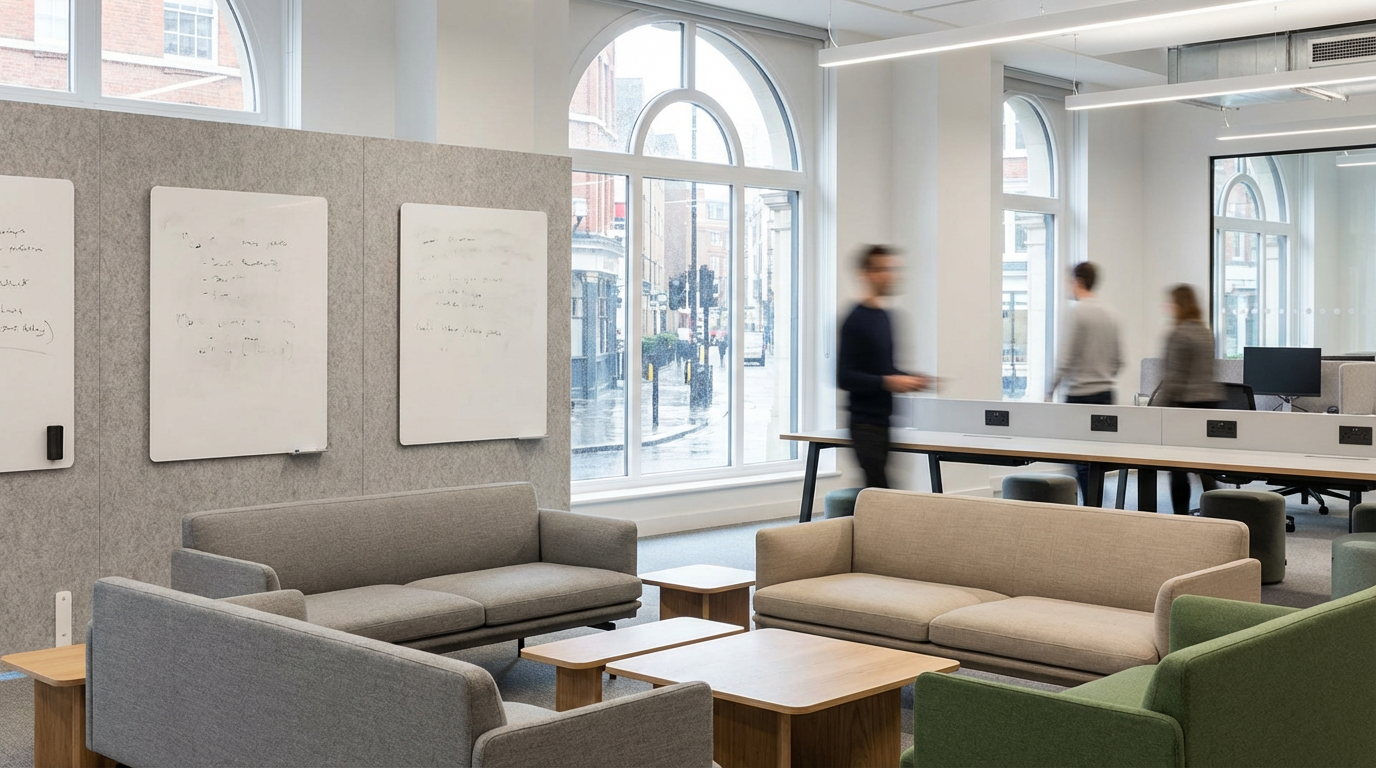
This change in function has driven a change in design. Developers and landlords who have adapted quickly are providing spaces that look quite different from the grid of desks that characterised most UK office floors a decade ago. Collaboration zones, informal meeting areas, quiet rooms for focused calls, and social spaces now account for a much larger proportion of the floor plan.
Demand Patterns Have Shifted, Not Disappeared
It would be inaccurate to say that demand for office space has collapsed. What has happened is more nuanced: demand for a particular type of space — large, long-leased, low-specification — has declined, while demand for flexible, well-located, high-quality space has remained robust and in some cases grown.
Serviced offices and co-working arrangements have been among the clearest beneficiaries. The ability to take space for shorter periods, with fewer upfront commitments, suits the planning horizon of businesses that are no longer confident in predicting their headcount three or five years out.
Regional Cities Are Gaining Ground
One consistent finding across commercial property data is that regional cities have held up better than might have been expected. Manchester, Leeds, Edinburgh, Bristol, and Birmingham have each seen meaningful demand for well-specified office space from both established companies and growing businesses choosing not to base themselves in London.
The factors driving this include lower costs, improved transport links, a growing pool of local talent, and the reduced pressure — in a hybrid working world — to be physically close to London clients and partners.
What Comes Next
Industry analysts broadly agree that the current pattern — reduced overall demand, higher quality expectations, shorter leases, regional distribution — represents a durable shift rather than a temporary correction. Landlords and developers who have recognised this early are investing in upgrading existing stock; those holding on to older, lower-specification space in secondary locations face a more difficult outlook. For occupiers, the current market offers more flexibility than at any point in recent memory.
Editorial note: This article is intended for general informational purposes. medinitiatives.com is an independent publisher.