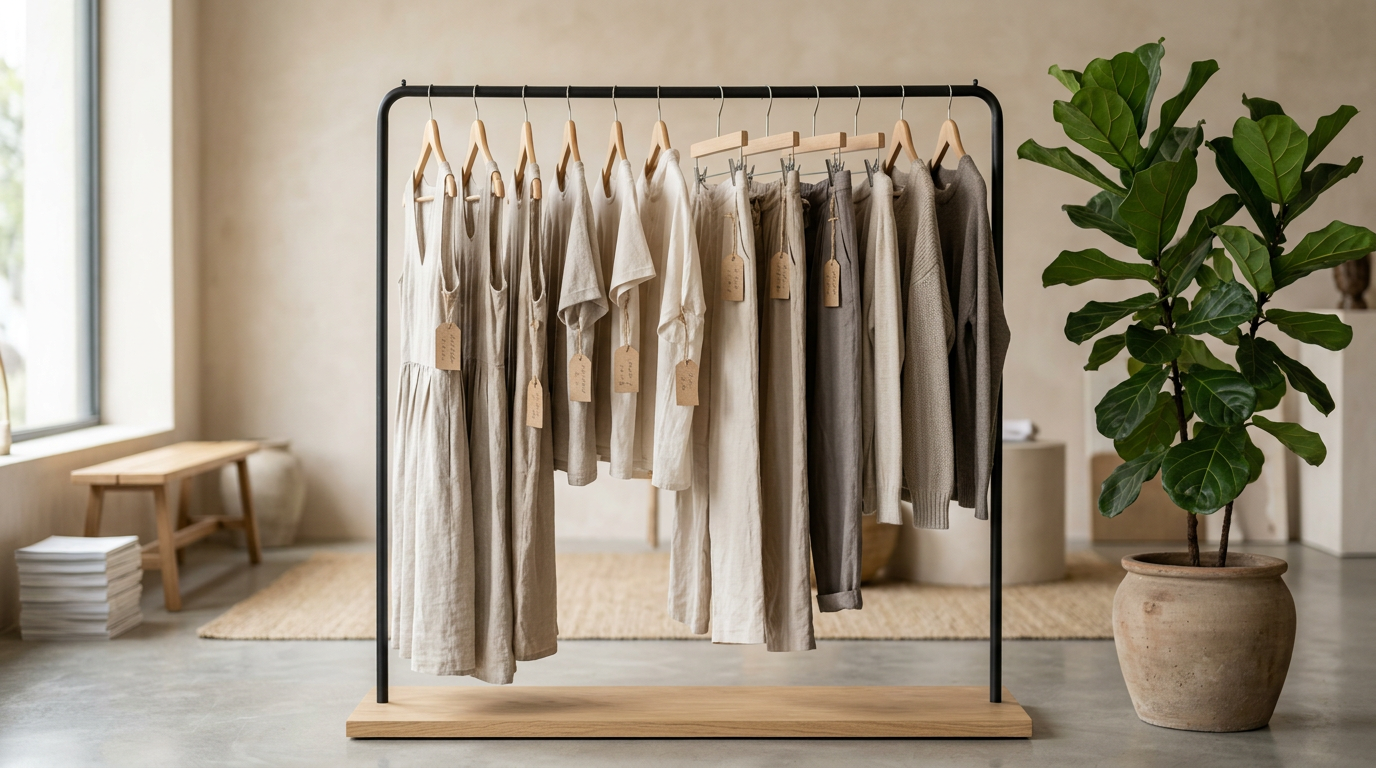
The United Kingdom's fashion industry has been discussing sustainability for years, but 2025 and early 2026 have seen something shift from conversation to commercial reality. Brands built around transparency, lower environmental impact, and ethical manufacturing are gaining meaningful market share and, in some demographics, becoming the default rather than the exception.
What Consumers Are Actually Doing Differently
Survey data on consumer attitudes toward sustainable fashion has for years suggested high interest but inconsistent follow-through. The picture now is more nuanced. Purchasing behaviour has not transformed wholesale, but there is a measurable change in how British consumers approach clothing decisions — more questions about origin and durability, more attention to resale value, and more willingness to pay a higher price per item for things expected to last longer.
The second-hand market has been a significant part of this shift. Platforms facilitating the resale of pre-owned clothing have grown substantially in the UK, and their users skew across age groups more than initial assumptions suggested.
Where Transparency Is Making a Difference
One of the clearest competitive advantages that sustainable brands have developed is the ability to tell a credible story about where their products come from and how they are made. In a category where greenwashing remains a genuine problem, brands that can provide specific, verifiable information — factory names, material certifications, carbon accounting — are building trust at a rate that marketing alone cannot replicate.
The Mainstream Response
Major UK retailers have been responding with their own initiatives — sustainable product lines, take-back schemes, commitments to reduce the proportion of virgin synthetic materials in their ranges. Independent sustainable brands tend to view mainstream retailer engagement with the category as validation rather than threat: the conversation being had at scale normalises the questions that smaller brands have been asking their customers to ask for years.
Challenges That Remain
Price remains the most commonly cited barrier. Sustainably produced clothing generally costs more than equivalents made without those constraints, and for a significant proportion of UK consumers, budget is the primary factor in clothing decisions. The brands making the most progress are those addressing this directly — designing for longevity so that cost-per-wear is competitive, offering repair services, and building resale programmes that allow customers to recoup part of their initial investment.
Editorial note: This article is intended for general informational purposes. medinitiatives.com is an independent publisher.